October 10, 2026



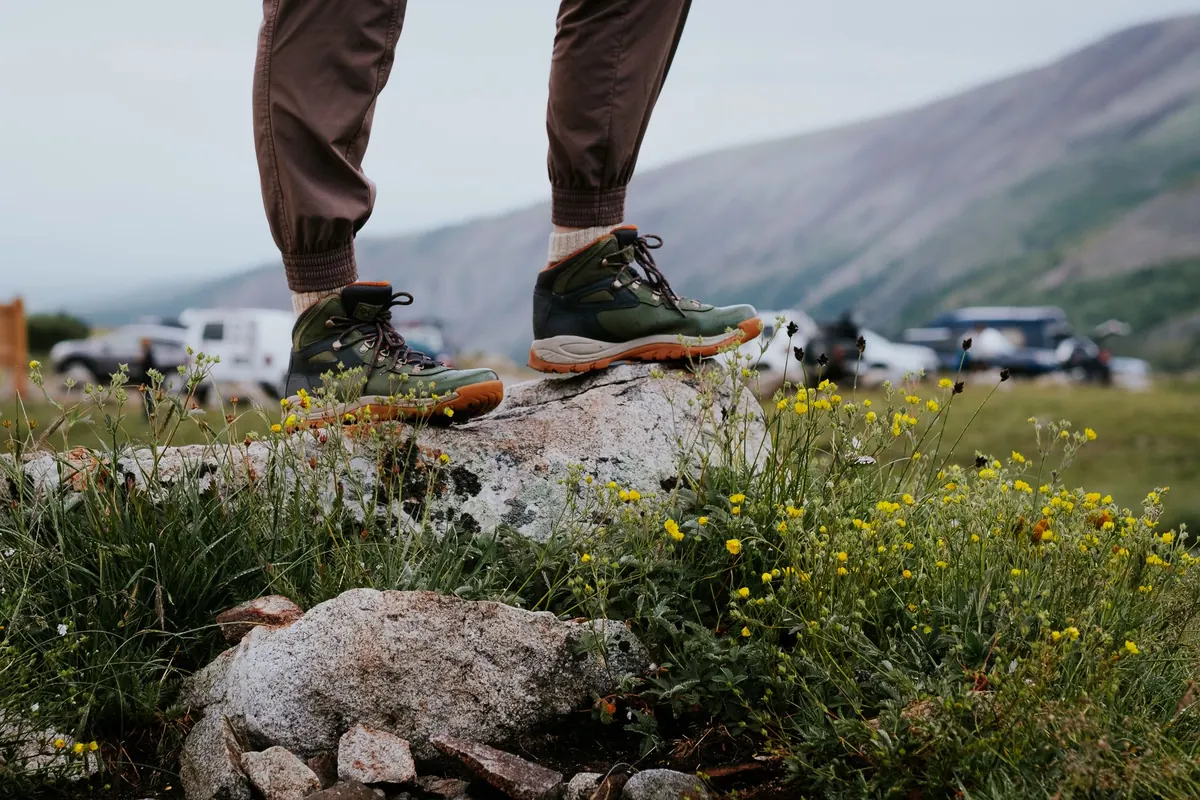
There's a moment on every British trail when the ground stops being a path and starts being an argument. Peat bog on the Kinder plateau, greasy limestone in the Dales, wet granite slabs in Snowdonia. Whatever is on your feet has to cope with all of it, and the shoe that felt perfect in the shop can feel like a mistake an hour from the car. Trail running shoes and hiking boots sit at opposite ends of a long spectrum, and neither is the wrong answer. What matters is matching the footwear to the ground, the load and the distance.
Trail running shoes are low-cut, flexible and light, often somewhere between 250g and 350g per shoe. The mesh upper breathes and drains, the soft midsole lets your foot flex over uneven ground, and the outsole is built around aggressive lugs. What they don't have is a collar around the ankle, and they don't last forever.
Hiking boots go the other way: a cut above the ankle, a stiffer midsole, a shank or rock plate, thicker leather or synthetic uppers, and typically 500g to 800g per boot or more. They protect, they support, and they are heavier and warmer.
Between the two sits a useful middle ground of mid-cut boots, fast hiking shoes and approach shoes. It's worth looking there rather than treating this as a straight either/or. A mid-cut boot with a soft sticky sole is, for many UK walkers, the honest answer to a question they never asked.
Grip is where the choice is most obvious and least understood. Two things matter: the depth and spacing of the lugs, and how soft the rubber compound is.
In mud, deep lugs with wide gaps win. They bite into soft ground and shed it as you lift your foot. Shallow, closely spaced tread clogs and turns slick. If your routes are mostly field paths, woodland singletrack and peat, anything with 4mm to 6mm lugs will do the job.
On wet rock the rules change. Polished limestone, greasy gritstone slabs and damp tree roots need soft, sticky rubber rather than deep lugs. Many trail shoes use softer compounds that grip better on wet rock but wear down faster on abrasive ground. Boots often use harder rubber that lasts for years but can skate across wet slabs.
If you spend most of your time on rocky Lakeland or Scottish paths, prioritise rubber softness and a rock plate under the forefoot. If it's bog, prioritise lugs. If it's both — and in the UK it usually is — accept that you're choosing which hazard to be slightly worse at, and buy accordingly.
Boots protect the ankle. Whether they support it is more nuanced. A higher, stiffer collar limits how far the ankle can roll sideways and shields the joint from scree and the odd misplaced foot. That's real, and it matters when you're carrying a heavy pack over rough ground for hours.
Much of what keeps an ankle stable comes from the foot itself: the small muscles and the feedback from the ground. A low shoe lets those work harder. Some walkers find that after a season in low shoes their ankles feel steadier, not weaker. That said, it's no reason to change if you have a history of sprains.
A practical rule: if you've sprained an ankle more than once, or you regularly carry 12kg or more, a mid-cut or a boot is the sensible choice. If your pack is light and your terrain varied, low shoes are fine. If ankle problems keep recurring, a physiotherapist is a better investment than any pair of boots.
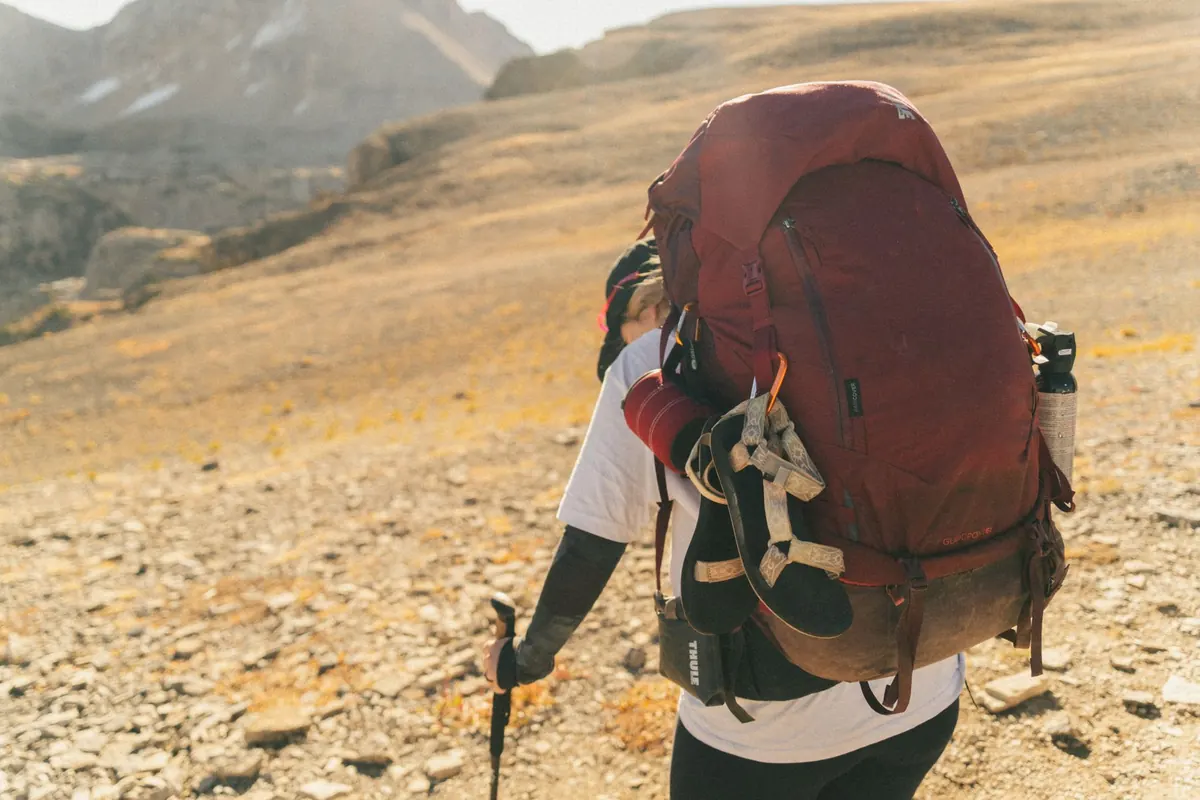
Weight on the foot costs more energy than weight on the back, because you lift it with every step, thousands of times over a long day. Light shoes make a walk feel shorter. Boots buy protection and stiffness with that weight. For a multi-day route with a heavy pack, boots usually earn their keep. For fast, light days, they rarely do.
A waterproof boot keeps water out until it comes over the top, soaks through the tongue or pours in at a stream crossing. After that, the membrane that kept water out now keeps it in, and a soaked boot can take a long time to dry.
Mesh trail shoes do the opposite. They get soaked in seconds and drain just as fast, so on a wet-but-shallow day your feet end up wet and warm rather than wet and cold. With merino or synthetic socks, that's a workable arrangement for most British conditions — as long as you keep moving.
The one place boots clearly win is cold. Wet feet in January on a Cairngorm plateau are a genuine safety issue, not a comfort one. If your walks are winter hill days, snow, or long hours above the snowline, a waterproof boot earns its weight.
Whichever you choose, the shoe is only half the system. Socks control sweat, cushion hot spots and reduce friction. Wool or merino blends hold warmth when wet; synthetic blends dry faster and stay thinner under a tight-fitting trail shoe. Cotton is the one clear mistake: it holds water against the skin and turns a wet foot into a blistered one.
Fit matters more than category. A boot that rubs the heel on a flat path will rub it raw on a descent, and a trail shoe half a size too small will jam your toes on every steep drop. Add roughly half a thumb's width in front of your longest toe, check the heel lock, and walk a few steep ramps in the shop if you can.
If you'd rather have a quick answer than a principle, here's a rough UK guide:
Buy for the worst hour of the day, not the first one. Shoes that feel glorious for the first mile and cruel for the tenth were bought for the wrong mile.
There's no single winner. Trail runners are lighter, more breathable and faster-drying; boots are more protective, warmer and better under load. The UK does not really do dry, grippy ground, so the sensible answer is usually the middle path: a low or mid shoe with soft rubber for rock, deeper lugs for mud, and enough stiffness to keep your feet intact after six hours. Start with the terrain you walk most, buy for the worst conditions you'll accept, and let the shop assistant talk you out of anything pretty.
Photo: Evelyn Hale / Pexels
Explore the path less travelled.
Copyright © 2026 Sable Path. All rights reserved. Sable Path.